Because the moment school starts, every virus in Essex decides to come out of retirement.
When September arrives, children march back into classrooms full of enthusiasm, new stationery, and approximately 400 opportunities to catch something. At Southend Coastal Surgeries, we see it every year — the sniffles, the coughs, the sore throats, the ear pain, the “Mum, I don’t feel well” at 7:52am.
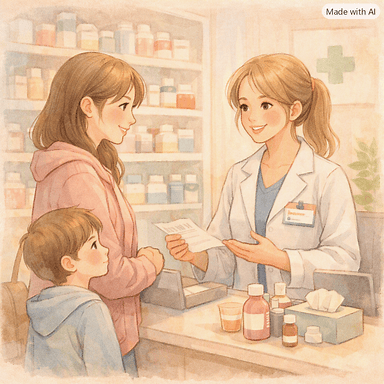
But before you panic‑dial us at 8am, let’s talk about Pharmacy First, the NHS scheme designed to save your sanity, your time, and our phone lines.
Pharmacy First: Your Secret Weapon for Back‑to‑School Bugs
Pharmacy First allows trained pharmacists to assess, treat, and supply prescription‑only medicines for several common conditions without needing a GP appointment.
It’s fast. It’s convenient. And it keeps GP appointments free for children who genuinely need them.
Pharmacists can treat children for many minor illnesses, but the exact age depends on the condition:
- Ear infections: Ages 1 to 17
- Sore throats: Ages 5 to 17
- Sinusitis: Ages 12 to 17
- Infected insect bites: Ages 1 to 17
- Impetigo: Ages 1 to 17
- Shingles: Adults only (but parents often ask!)
- UTIs: Women aged 16 to 64
For coughs, colds, fever, and general viral misery, pharmacists can advise on safe treatments for all ages, including babies — though anything concerning should always be checked by a clinician.
What pharmacists can do under the scheme
- Assess symptoms
- Provide clinical advice
- Supply prescription‑only medication when appropriate
- Offer over‑the‑counter treatments
- Give safety‑netting advice
- Tell you when GP care is needed
They’re absolute stars — and often quicker to access than a GP.
Coughs, Colds, Sore Throats & Ear Infections: The Back‑to‑School Survival Guide
Once the school gates open, these illnesses arrive like clockwork. Children mix closely, share everything (including germs), and suddenly every household is stocked with tissues, Calpol, and a child dramatically clutching their ear. Most of these illnesses are mild, short‑lived, and part of growing up — but they can certainly cause chaos at home.
Coughs and colds are the classics. Children collect them like Pokémon cards. A runny nose here, a cough there — it’s all part of building their immune system. Sore throats can be equally dramatic, with some children acting as though they’ve swallowed a cactus. Ear infections, meanwhile, have a special talent for striking at precisely 2am, just when everyone was finally asleep.
Most of these illnesses settle with simple home care, and this is where parents can make a huge difference.
What Parents Can Do at Home
Illnesses never strike at convenient times. It’s either just before school, just after school, or precisely when you’ve sat down with a cup of tea. Having a few essentials at home can make life much easier and help you feel prepared when the sniffles begin.
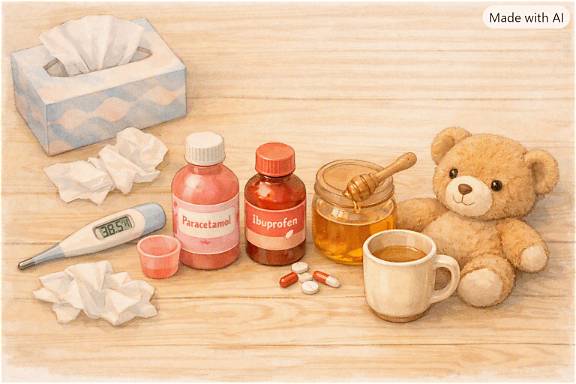
A basic digital thermometer is invaluable — it tells you whether your child has a genuine fever or is simply being dramatic because they don’t fancy going to school. Children’s paracetamol (Calpol) and ibuprofen (Nurofen) are excellent for fever, pain, and general discomfort, as long as you follow the instructions on the bottle. Honey works wonders for coughs in children over one, and saline nasal spray is a gentle, surprisingly effective way to unblock little noses. Keep plenty of tissues on hand, because children have an incredible ability to use exactly one tissue per sneeze. And never underestimate the power of fluids, rest, and a quiet space with a blanket — sometimes the simplest comforts make the biggest difference.
Most coughs, colds, sore throats, and ear infections will improve with these measures alone. But if your child has a high fever lasting more than three days, difficulty breathing, severe pain, or simply seems “not themselves,” we’re here to help
What Parents Can Do at Home
Illnesses never strike at convenient times. It’s either just before school, just after school, or precisely when you’ve sat down with a cup of tea. Having a few essentials at home can make life much easier and help you feel prepared when the sniffles begin.
A basic digital thermometer is invaluable — it tells you whether your child has a genuine fever or is simply being dramatic because they don’t fancy going to school. Children’s paracetamol (Calpol) and ibuprofen (Nurofen) are excellent for fever, pain, and general discomfort, as long as you follow the instructions on the bottle. Honey works wonders for coughs in children over one, and saline nasal spray is a gentle, surprisingly effective way to unblock little noses. Keep plenty of tissues on hand, because children have an incredible ability to use exactly one tissue per sneeze. And never underestimate the power of fluids, rest, and a quiet space with a blanket — sometimes the simplest comforts make the biggest difference.
Most coughs, colds, sore throats, and ear infections will improve with these measures alone. But if your child has a high fever lasting more than three days, difficulty breathing, severe pain, or simply seems “not themselves,” we’re here to help.
🚫 Why We Don’t Hand Out Antibiotics Like Sweets
Parents often ask, “Why won’t you just give antibiotics?” The honest answer is simple: most childhood illnesses are caused by viruses, and antibiotics do absolutely nothing for viruses. Giving antibiotics for a viral infection is like trying to fix a broken TV with a banana — it won’t work, and it causes problems.
Every time someone takes antibiotics unnecessarily, bacteria get a tiny bit smarter. Over time, they learn how to survive the medication. This is called antibiotic resistance, and it means antibiotics stop working when we truly need them. Resistant infections are harder to treat, require stronger medicines, and can lead to longer hospital stays. We want antibiotics to remain effective for the children who genuinely need them — not wasted on a cold that will clear on its own.
Antibiotics also come with side effects. They can upset the stomach, cause diarrhoea, rashes, thrush, and in some cases allergic reactions. They’re powerful medicines, and we use them carefully to protect your child’s long‑term health.
Asthma + Colds/Coughs
When a child with asthma catches a cold or cough, everything becomes just a little more dramatic. A simple sniffle can turn into a wheezy night, and a mild cough can suddenly sound like they’re auditioning for a Victorian orphan role. For asthmatic children, viruses can irritate the airways more easily, making them tighter, more sensitive, and quicker to react. This doesn’t mean every cold will turn into a crisis — far from it — but it does mean parents need to keep a slightly closer eye.
The most important thing is to make sure your child’s inhalers are up to date and that you actually know where they are. (We say this with love, but we have seen many inhalers living full‑time in school bags, under beds, and occasionally in the glove compartment of the car.) If your child uses a preventer inhaler, this is the moment to make sure they’re taking it exactly as prescribed. Their airways need all the calm and stability they can get when a virus is trying to stir things up.
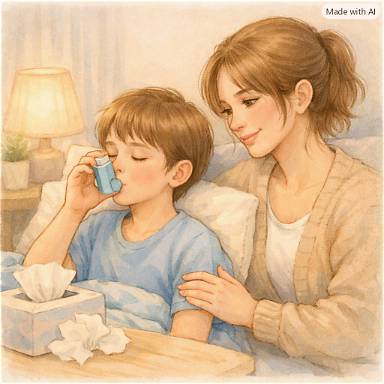
If your child starts coughing more than usual, becomes wheezy, or seems short of breath, their reliever inhaler should be close at hand. It’s there to relax the airways and make breathing easier. Many children bounce back quickly once they’ve had a dose, but if you find they’re needing it more often than usual, or it doesn’t seem to help as much as it normally does, that’s when you should get in touch with us. And if your child has an asthma action plan, this is the perfect time to dust it off and follow the guidance — it’s designed to help you know exactly what to do.
Most asthmatic children manage colds perfectly well with a bit of extra care, plenty of fluids, rest, and reassurance. But if your child is struggling to breathe, breathing faster than usual, sucking in around the ribs, or simply looks unwell, you should seek medical help straight away. We’re always here to support you, and we’d much rather you call us early than worry at home.
🏥 When Southend Coastal Surgeries Steps In
Of course, we’re always here when things feel more serious or you’re worried. We can check chests, ears, and throats, support children with asthma or allergies, and provide safety‑netting advice so you know exactly what to look out for. Sometimes parents simply need reassurance, and we’re always happy to offer it.
❤️ A Final Word
Back‑to‑school bugs are annoying, inconvenient, and occasionally dramatic — but they’re usually short‑lived. Between Pharmacy First, your home‑care cupboard, and our team at Southend Coastal Surgeries, your child is in safe hands. And if you’re ever unsure, worried, or just need a bit of reassurance, we’re here.

For more helpful healthcare advice follow these blogs or go to http://www.southendcoastalsurgeries.co.uk

